
Revisiting My Brain Tumor Journey on the Love Heals Podcast
📺WATCH THE EPISODE📺
🎧LISTEN TO THE EPISODE🎧
Sometimes sharing your story takes just as much courage as living it.
Recently, I had the opportunity to sit down with Sarah Nelson and Courtney Green from the Love Heals Organization on the Love Heals Podcast, and the experience meant more to me than I expected.
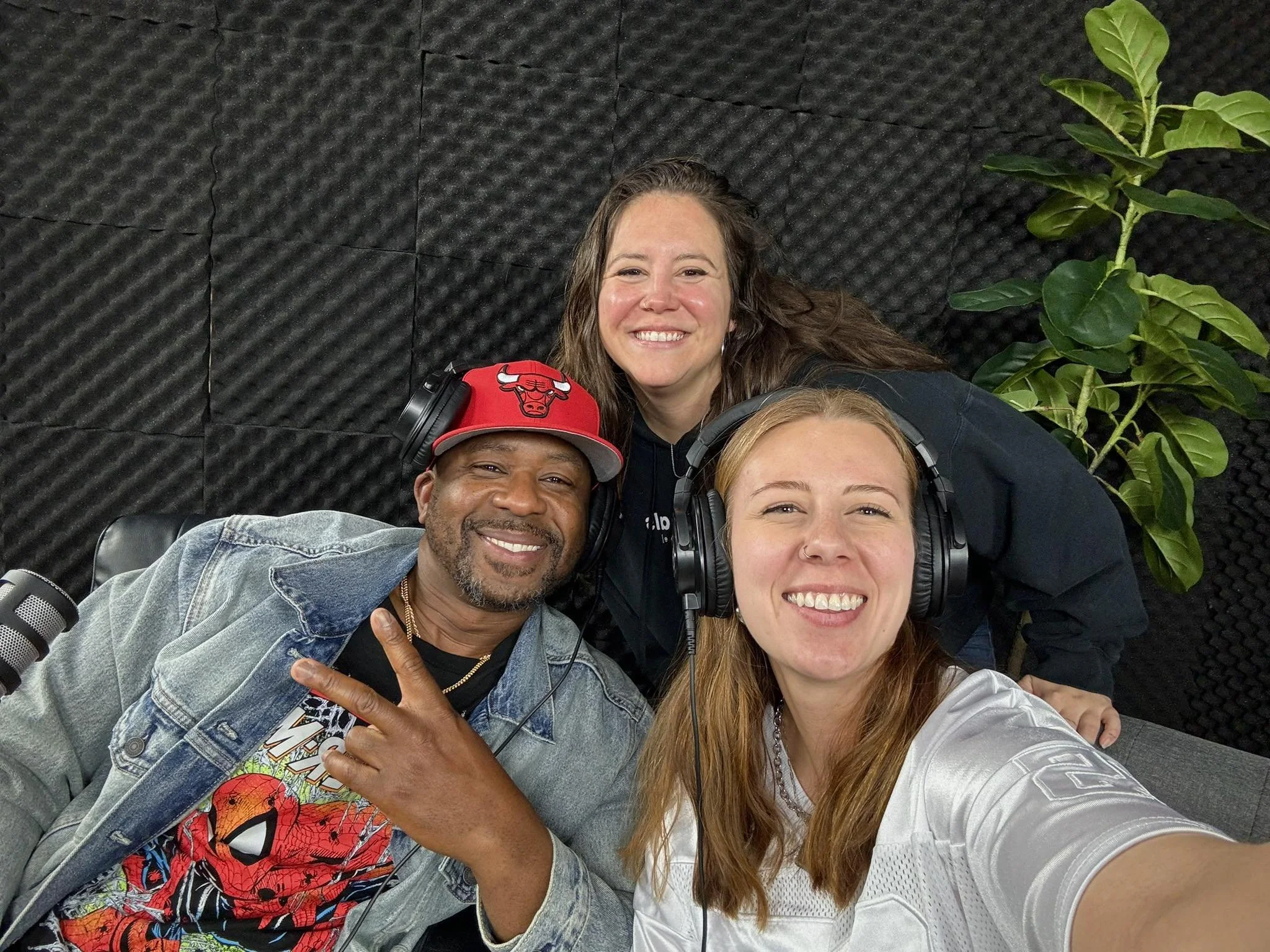
From the moment the conversation started, I felt completely comfortable. Sarah and Courtney did a phenomenal job interviewing me. Their approach was thoughtful, compassionate, and genuine. They created an environment where it didn’t feel like I was being interrogated for a podcast episode. It felt like a real conversation between people who truly cared about the story being shared.
And that matters when you’re talking about something as personal as a life-altering medical journey.
There were moments during the conversation where I could feel the emotions rising. Revisiting certain parts of my story brought me right back to the fear, uncertainty, and vulnerability of those moments. A few times I honestly felt like I was holding back tears while explaining what happened.
But that’s the reality of telling a real story.
When you revisit something that changed your life, the emotions come with it.
And if sharing those moments helps someone else feel less alone in their own struggle, then it’s worth it.
From Lynchburg Roots to a Platform Built on Storytelling
For those who may be hearing my story for the first time, my name is Johnathan Smith, also known as TeflonJohn.
I’m a motivational media creator, community advocate, and brain tumor survivor. I’m also the founder of TeflonJohn.com, a platform dedicated to inspiring people through storytelling, podcasts, motivational content, blogs, and radio programming.
The mission behind everything I build is simple:
Changing the world one person at a time by provoking thought.
Through my media platforms, I aim to create conversations that challenge people to grow, reflect, and see life from a deeper perspective.
Today my work includes hosting and producing multiple shows such as:
• The Art of Reinvention Show
• The Spotlight Insider
• I Have A What? Surviving a Brain Tumor
The I Have A What? Surviving a Brain Tumor podcast was created to document my personal medical journey and share the real experiences behind diagnosis, treatment, and recovery.
I also operate TeflonRadio, a platform that blends music, culture, and motivational discussion while spotlighting emerging voices.
But long before I stepped into the world of podcasting and media, my professional life looked very different.
For nearly two decades, I worked in consumer goods manufacturing and validation, focusing on quality assurance and product safety. My career required precision, attention to detail, and the ability to analyze complex systems.
Ironically, those same skills later became essential when I had to navigate one of the most complicated systems a person can face.
The healthcare system.
The Symptoms That Wouldn’t Go Away
My journey with a brain tumor didn’t begin with a diagnosis.
It began with symptoms.
At first, they seemed small. Manageable. Easy to explain away.
I began experiencing frequent headaches. Then came pain behind my eye. There were moments of imbalance when walking, and eventually numbness and tingling across parts of my face.
When symptoms appear gradually like that, it’s easy for doctors to assume they are caused by something common.
So I was told different things.
Maybe allergies.
Maybe TMJ.
Maybe stress or anxiety.
And when medical professionals say those things, it can make you question yourself.
But deep down, I knew something wasn’t right.
Years passed with symptoms coming and going. I continued visiting doctors, seeking answers, trying to understand what was happening to my body.
That process became frustrating.
And at times it felt like what many patients experience but rarely talk about openly.
Medical gaslighting happens when patients feel their symptoms are minimized, dismissed, or explained away without deeper investigation.
Eventually, after continuing to advocate for myself and push for answers, I was finally scheduled for an MRI.
That MRI changed everything.
The scan revealed a brain lesion.
Further testing confirmed the diagnosis: a Grade 2 atypical meningioma.
This type of tumor sits in a complicated category. It isn’t clearly benign, but it also isn’t classified as malignant cancer. However, it carries serious risks and requires careful medical decision making.
Organizations like the American Brain Tumor Association provide education and support for patients navigating diagnoses like this. Resources like these can be incredibly valuable when you're trying to understand complex medical information during an already overwhelming time.
Hearing those words instantly shifts your reality.
Life before that moment feels very different from life after it.
Facing the Reality of Brain Surgery
Once the tumor was discovered, the next challenge was deciding how to treat it.
And surprisingly, even within the medical community, there were different opinions.
Some doctors recommended aggressive surgical removal immediately. Others suggested exploring radiation treatments or monitoring strategies first.
When you’re facing something happening inside your brain, every decision carries weight.
You begin thinking about outcomes most people never imagine.
What if the surgery affects your ability to move?
What if it affects your memory?
What if you don’t wake up the same person?
Those fears are real.
Eventually, after consulting with specialists and gathering multiple opinions, a treatment plan was put into place.
I underwent brain surgery on March 15, followed by gamma knife radiation treatment in July.
The surgery itself lasted several hours, and the most delicate part occurred during the final portion when surgeons worked around extremely sensitive areas of the brain.
When I woke up from the procedure, one of the first things I realized was that I had temporarily lost movement on the right side of my body.
Imagine trying to move your arm or leg and realizing your body isn’t responding the way it always has.
That moment humbles you instantly.
Thankfully, over time, movement began to return.
But recovery was far from easy.
The Long Road of Recovery
Many people assume that once surgery is finished, the hardest part is over.
In reality, recovery is its own journey.
For several months after surgery, I dealt with extreme fatigue. My body needed more rest than I had ever experienced before.
There were challenges with coordination, depth perception, and fine motor skills. Even simple actions like texting or typing with my right hand were difficult at first.
Your body has to relearn things.
Your brain has to rewire connections.
Your mind has to adjust to a completely new perspective on life.
But recovery also changes the way you see everyday things.
Walking becomes a blessing.
Breathing without pain becomes something you notice.
Even the ability to stand up and move freely becomes something you’re grateful for.
Those are the moments that reshape how you think about life.
Turning Pain Into Purpose
After surviving something like brain surgery, your perspective changes.
You begin asking deeper questions.
Why did this happen?
What am I supposed to do with this experience?
For me, the answer became clear.
I needed to share my story.
That’s why I created I Have A What? Surviving a Brain Tumor.
The show allows me to talk openly about diagnosis, treatment, recovery, fear, faith, and resilience.
It also creates space for conversations about self-advocacy in healthcare.
Patients need to understand that they have a voice in their medical journey.
They can ask questions.
They can seek second opinions.
They can research treatment options.
And they should never feel afraid to push for answers when something doesn’t feel right.
Because sometimes persistence is what leads to life-saving discoveries.
Why the Love Heals Conversation Meant So Much
That’s why my conversation with Sarah Nelson and Courtney Green on the Love Heals Organization podcast meant so much to me.
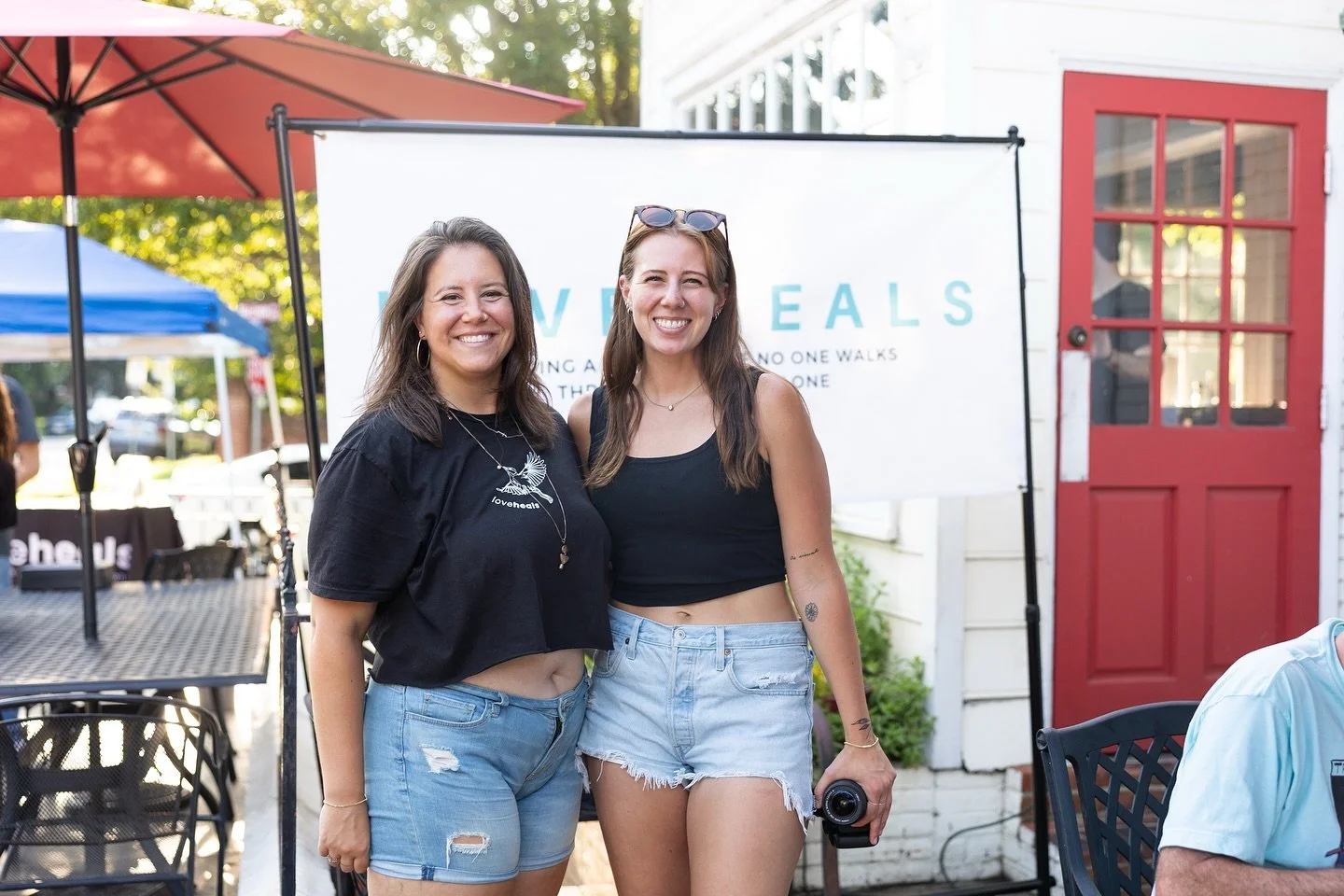
Love Heals is an organization dedicated to walking alongside people during medical hardship and crisis. Their mission is rooted in compassion, community support, and ensuring that no one has to face difficult circumstances alone.
During the interview, Sarah and Courtney created a safe space for vulnerability.
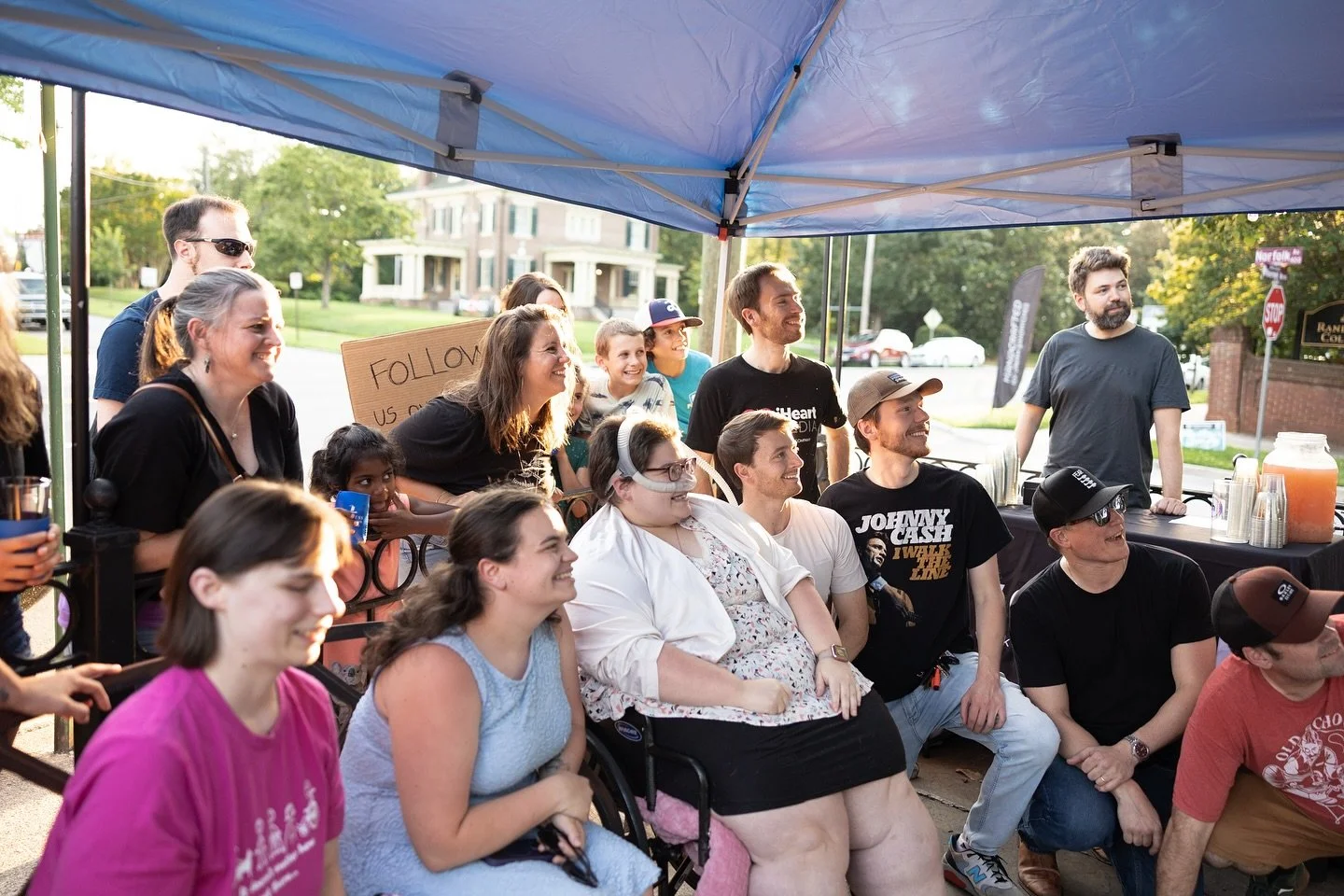
They asked thoughtful questions that allowed me to reflect deeply on the journey.
At times I could feel the emotion rising again, remembering the fear of surgery, the uncertainty of diagnosis, and the long road of recovery.
But those emotions are part of the story.
And sharing them is part of the healing process.
A Message for Anyone Facing a Health Battle
If there’s one message I hope people take away from my story, it’s this:
Trust your body.
If something doesn’t feel right, keep asking questions.
Seek second opinions.
Research your condition.
Advocate for yourself.
And remember that community matters.
Organizations like Love Heals exist because people understand that hardship should never be faced alone.
Moving Forward
Today, I continue using my platform to inspire and empower others through storytelling, media, and conversation.
Through podcasts, blogs, motivational videos, and radio programming, my goal is simple:
Help people find strength in their struggles and purpose in their pain.
Because sometimes the hardest chapters of our lives become the very stories that help someone else keep going.
Changing the world one person at a time. By provoking thought.
Learn more about my journey and content at
TeflonJohn.com
And if you or someone you love is navigating a medical challenge, remember:
You are not alone.
Support the Mission
If Season 1 of I Have A What?! Surviving a Brain Tumor resonated with you, you can support this mission by visiting BuyMeACoffee.com/TeflonJohn. Your support helps continue honest storytelling, advocacy, and encouragement for people navigating brain tumors, meningioma diagnoses, and invisible health battles.
Thank you for walking with me through this season.
One love, be blessed.
🎧Listen To The Episode🎧 Spotify
🎧Listen To The Episode🎧 Apple Podcasts
🎧Listen To The Love Heals Podcasts🎧
🎧Get Caught Up With My Story🎧
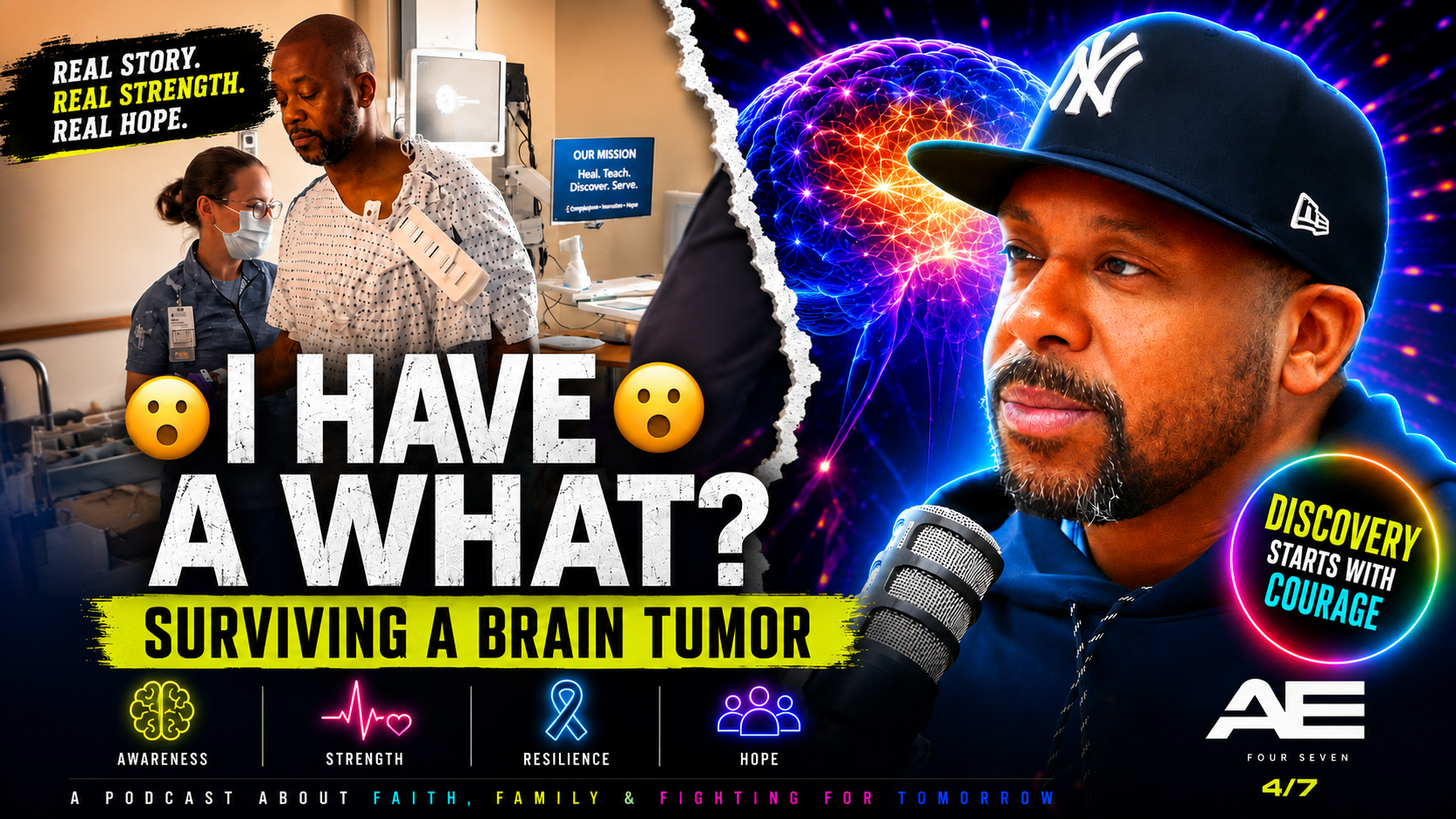

In this episode, I share the emotional tension between my fear and my mom’s faith as I prepared for brain surgery. Her belief in what God could do challenged me in ways I did not understand at the time, but looking back, I realize it was pushing me to face the fear I was trying to hide.